A Night of Flames
Cover
Praise for
MATTHEW HARFFY
‘Harffy is a master of the Dark Age thriller... A Time for Swords is a bold opening to yet another enthralling series. It promises to be one heck of a ride.’
Theodore Brun,
author of A Mighty Dawn
‘Terrific white-knuckle action, absolutely gripping storytelling... Can’t wait for the next one. Highly recommended!’
Angus Donald,
author of Robin Hood and the Caliph’s Gold
‘Nothing less than superb... The tale is fast paced and violence lurks on every page.’
Historical Novel Society
‘Harffy’s writing just gets better and better... He is really proving himself the rightful heir to Gemmell’s crown.’
Jemahl Evans,
author of The Last Roundhead
‘A tale that rings like sword song in the reader’s mind. Harffy knows his genre inside out.’
Giles Kristian,
author of Camelot
BY MATTHEW HARFFY
A Time for Swords series
A Time for Swords
A Night of Flames
Bernicia Chronicles
The Serpent Sword
The Cross and the Curse
Blood and Blade
Killer of Kings
Warrior of Woden
Storm of Steel
Fortress of Fury
For Lord and Land
Kin of Cain (short story)
Other novels
Wolf of Wessex
Title Page
A NIGHT
OF
FLAMES
MATTHEW
HARFFY
An Aries book
Copyright
First published in the UK in 2022 by Head of Zeus Ltd,
part of Bloomsbury Publishing Plc.
Copyright © Matthew Harffy, 2022
The moral right of Matthew Harffy to be identified as the author of this work has been asserted in accordance with the Copyright, Designs and Patents Act of 1988.
All rights reserved. No part of this publication may be reproduced, stored in a retrieval system, or transmitted in any form or by any means, electronic, mechanical, photocopying, recording, or otherwise, without the prior permission of both the copyright owner and the above publisher of this book.
This is a work of fiction. All characters, organisations, and events portrayed in this novel are either products of the author’s imagination or are used fictitiously.
A catalogue record for this book is available from the British Library.
ISBN (HB): 9781801102278
ISBN (XTPB): 9781801102285
ISBN (E): 9781801102308
Head of Zeus Ltd
5–8 Hardwick Street
London EC1R 4RG
Dedication
A Night of Flames
is for Derek and Jacqui
(More mead?)
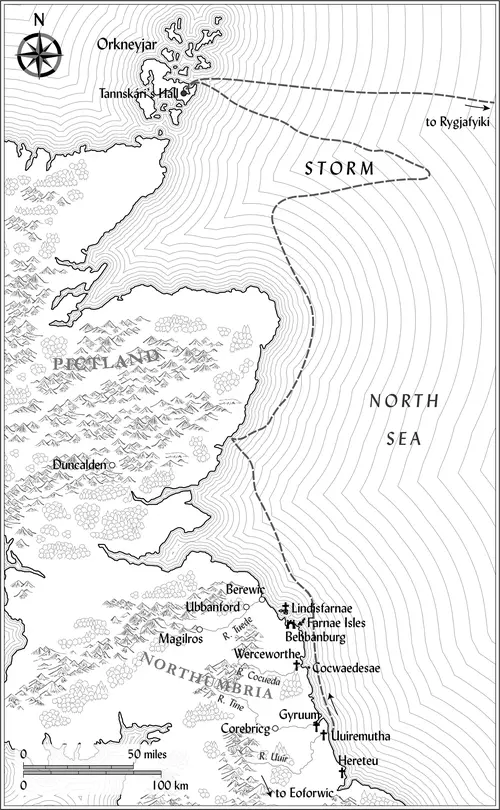
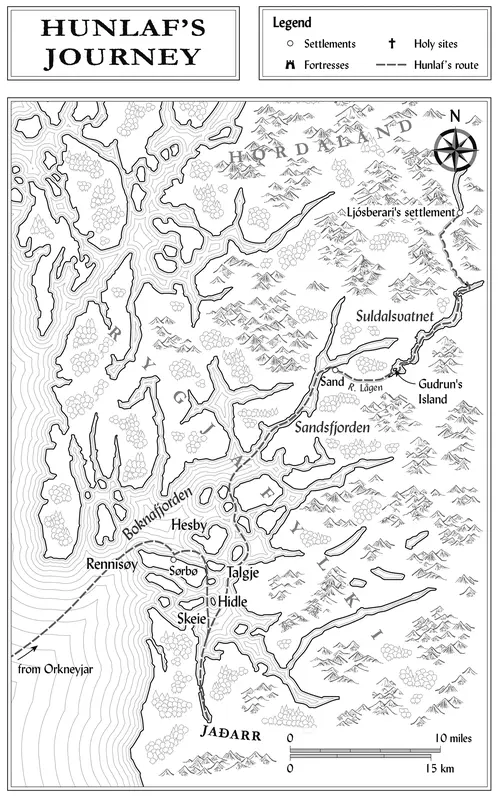
Maps
Epigraph
And God saw the light, that it was good: and God divided the light from the darkness.
Genesis 1, verse 4
Take heed therefore that the light which is in thee be not darkness.
Luke 11, verse 35
Contents
Praise for Matthew Harffy
By Matthew Harffy
Title Page
Copyright
Dedication
Maps
Epigraph
Place Names
One
Two
Three
Four
Five
Six
Seven
Eight
Nine
Ten
Eleven
Twelve
Thirteen
Fourteen
Fifteen
Sixteen
Seventeen
Eighteen
Nineteen
Twenty
Twenty-One
Twenty-Two
Twenty-Three
Twenty-Four
Twenty-Five
Twenty-Six
Twenty-Seven
Twenty-Eight
Twenty-Nine
Thirty
Thirty-One
Thirty-Two
Thirty-Three
Thirty-Four
Thirty-Five
Thirty-Six
Thirty-Seven
Thirty-Eight
Thirty-Nine
Forty
Forty-One
Forty-Two
Forty-Three
Forty-Four
Forty-Five
Forty-Six
Forty-Seven
Forty-Eight
Forty-Nine
Fifty
Fifty-One
Fifty-Two
Fifty-Three
Fifty-Four
Fifty-Five
Fifty-Six
Fifty-Seven
Fifty-Eight
Fifty-Nine
Sixty
Sixty-One
Sixty-Two
Author’s Note
Acknowledgements
About the Author
An Invitation from the Publisher
Place Names
Early medieval place names vary according to time, language, dialect and the scribe who was writing. I have not followed a strict convention when choosing the spelling to use for a given place. In most cases, I have chosen the name I believe to be the closest to that used in the late eighth century, but like the scribes of all those centuries ago, I have taken artistic licence at times, and, when unsure, merely selected the one I liked most.
Some of the place names also occur in my Bernicia Chronicles novels with different spellings. This is intentional to denote that this is not part of that series and also to indicate the passage of time and the changes to language that occur over the centuries.
| Alabur | Aalborg, Denmark |
| Al-Andalus | The Muslim-ruled area of the Iberian Peninsula |
| Al-Askar | The capital of Egypt from 750 – 868 |
| ar-Raqqah | Raqqa, Syria |
| Bebbanburg | Bamburgh |
| Berewic | Berwick upon Tweed |
| Boknafjorden | Bokna Fjord, Norway |
| Byzantion | Constantinople (Istanbul) |
| Cocueda, River | River Coquet |
| Cocwaedesae | Coquet Island |
| Cordova | Córdoba, Spain |
| Corebricg | Corbridge |
| Danapr | The Dnieper |
| Duiblinn | Dublin |
| Duncalden | Dunkeld, Scotland |
| Eoforwic | York |
| Fossa, River | River Foss |
| Farnae Isles | Farne Islands |
| Gwynedd | Early medieval kingdom, now a county, situated in the north-west of modern-day Wales |
| Gyruum | Jarrow |
| Hereteu | Hartlepool |
| Hidle | Sør-Hidle, Norway |
| Hǫrðaland | Hordaland, Norway |
| Ifriqiya | Area comprising what is today Tunisia, western Libya and eastern Algeria |
| Išbīliya | Seville, Spain |
| Jabal Tāriq | Gibraltar |
| Jaðarr | The traditional district of Jæren, Rogaland, Norway |
| Hesby | Hesby, Norway |
| Lågen | Suldalslågen river, Norway |
| Lindisfarnae | Lindisfarne |
| Loch Cuan | Strangford Lough, Northern Island |
| Magilros | Melrose |
| Madīnat as-Salām | The City of Peace, Baghdad, Iraq |
| Oguz il | (Oguz Land) Turkic state located in an area between the coasts of the Caspian and Aral Seas |
| Orkneyjar | Orkney Islands |
| Powys | Early medieval kingdom, now a county, situated in central modern-day Wales |
| Quentovic | Frankish trading settlement. The town no longer exists, but is thought to have been situated near the mouth of the Canche River |
| Rennisøy | Rennesøy, Norway |
| Roma | Rome |
| Rygjafylki | Rogaland, Norway |
| Sand | Sand, Norway |
| Sandsfjorden | Sandsfjord, Norway |
| Skeie | Skeie, Stavanger, Norway |
| Sørbø | Sørbø, Norway |
| Suldalsvatnet | Lake Suldal, Norway |
| Streanæshealh | Whitby |
| Talgje | Talgje, or Sør-Talgje, Norway |
| Tine, River | River Tyne |
| Tuede, River | River Tweed |
| Ubbanford | Norham |
| Usa, River | River Ouse |
| Uuir, River | River Wear |
| Uuiremutha | Monkwearmouth |
| Vestfold | Vestfold, eastern Norway |
| Volga | The Volga |
| Werceworthe | Warkworth |
One
Weeks have gone by since I last took up a quill. In spite of my infirmity, I am pleased to find my hand has not forgotten how to form letters. The words on the vellum may not be as perfectly aligned and bold as my writing once was, but they are clear enough and still better than many a scribe’s scratchings. My eyes, though, water constantly, and I need to dab at them to prevent the tears running down my cheeks like a man grieving for a loved one. But of course, I am mourning. I weep not just for the loss of all those I held dear, but selfishly, for my youth and the time that has trickled through my hands, like the fine burning sands of ar-Raqqah or the cool waters of the mighty Volga.
But I must not allow myself to become maudlin. Our Heavenly Father has granted me more time, so it is my duty to put it to good use. For many days, I believed I would never be able to return to telling my tale. I thought the Lord might take me. Or that the Almighty had forsaken me, and perhaps the Devil would come for my soul, as I lay trembling and moaning alone in my cell. I cursed my weakness, and on more than one occasion I needed to beg forgiveness, not just of God, but of His young servant, Coenric, who brought me food and tended to my needs. Coenric came to me every day. He spooned thin pottage into my mouth when I had no hunger, and he held me steady so that I could piss and shit in a pot, even when I was too weak to rise from my stinking pallet. The sallow-faced lad put up stoically with my whimpering fury, cleaning me, feeding me, and fetching more of the potion of woundwort, mugwort and wormwood that the old cunning woman from the village made to blunt the talons of the beast that scratched at my innards.
Coenric sat beside me as the foul liquid dulled my pain. Outside my cell, the long warm days of summer became ever shorter, as the year slipped inexorably towards the darkness of winter. My aged ears strained to hear the whistling song of the redwings and the chirrups of the fieldfares as the summer grew old, and I often wished that Coenric would sit in silence. Instead, he read from the Scriptures and prayed. On the few occasions when Abbot Criba came to visit me, the boy explained that he was doing all he could, and that I needed rest. He would offer me a small smile as he ushered the abbot out of my noisome room, and this lifted my spirits somewhat. Coenric knows how I detest the supercilious abbot. If Criba should ever read these pages, I can barely imagine how furious he would be.
Coenric is as different from Criba as steel is from cheese. I have known many men in my long life, both good and honourable, and loathsome and evil. And yet I do not recall having encountered any more Christlike in their compassion than young Coenric. I may sometimes berate him and he may not be the brightest boy in the world, but as I am sure he will read this, I would have him know that no matter my ill-temper, I know that I owe him much. I have oft been told I am a difficult man, quick to judge and fast to anger. I have clashed swords with dark-skinned Berbers in the forge-heat of Ifriqiya and pale-eyed screaming brutes in the snowy wastes of the north, sailed in Runolf’s great ship to lands beyond anything most men can imagine. I have walked the shadowed streets of Byzantion, and traversed the swollen rivers of the Baltic. It is not easy for one who has lived such a life to accept aid from anyone. But I am old now, and I know that Death has his skeletal hand on my shoulder. I loathe the decrepitude that has wrapped itself around me like a sodden cloak. I rail against the grip of time and the approach of my end, but I am not insensible of Coenric’s sacrifice these last weeks. And I am thankful for his patience and his ministrations.
One grey drizzled day, when the ache in my guts had been made distant by the cunning woman’s brew, I asked Coenric why he endured my poor humour and barbed words.
“Why, to make you well again, so that you can write the next volume of your annals,” he said, seemingly genuinely surprised by my question.
I looked out the small window at the leaden sky and listened to the constant drip of the rain from the building’s eaves. The smell of smoke, perhaps from the forge or a cooking fire, came to me on the breeze. The weather and the smoke sent me instantly back to that day long ago, when Skorri and his Norsemen brought chaos and death to Werceworthe, and my life changed forever.
I had not imagined that Coenric had read what I had been working on all those months. Clearly, he had not divulged my secrets to Criba, who still enquired regularly whether I would be well enough to continue with my transcription of the Vita Sancti Wilfrithi.
I began writing the story of my life and adventures so that a record of certain events might not be lost. I have many tales still to tell, if the good Lord sees fit to spare me for long enough. I never expected to have any readers of my work while I yet lived, but I would not wish to add lying to my numerous sins by saying that I am not gratified that at least one reader might be satisfied with the marks left by the scratching of my pen.
There may be those who read these pages and think they recognise other tales within them. Know then that these are the events as I remember them, but I am old, and perhaps my memory is not as sharp as it once was. Of course, it is also true that other stories may have been told before now by men or women who also witnessed these events, and they would surely resemble my own recollections. But each man can only see with his own eyes and remember that which his mind recalls, so what I offer here is my truth and that of no other.
I feel the curse of my age and illness hanging over me, an ever-present cloud, and I know that I must not squander any of the time given to me. Since Lady Day, the gnawing pain in my stomach has dwindled. I know not why. Whether this is a short reprieve, or an answer to Coenric’s prayers, I do not know. But as the acute agony has become a dull ache, so my mind has begun once more to wander the dark paths of my memories. To the days when I was not much older than Coenric. To the time when I arrogantly believed I would never grow old and die. I think back to the rain-soaked autumn and the frost-riven winter that followed the savage attack on Werceworthe.
I recall the sadness and grief, and then the rallying of the folk to rebuild what they had lost.
I remember marvelling as Runolf, the huge Norseman that many considered a brute, created a thing of exquisite beauty and power: a ship the likes of which no free Englisc man had voyaged in before.
And, although I do not wish to follow them down those dark trails, my memories pull me towards events I wish I could forget. To a river winding through towering trees that echo with the screams of the damned. To the vacant eyes of dead friends, staring unseeing at the flame-streaked sky of Hǫrðaland.
And, with a dreadful sadness and guilt, I remember as vividly as yesterday, the warmth on my cheek of the dying breath of the first truly innocent man with whom I crossed blades.
Two
His name was Wistan and though he was perhaps four or five years older than me, he was no fighter. I remember staring into his eyes as the sun rose over the North Sea on that summer’s morning long ago, and all I saw there was a righteous burning fury. In his hand he held a sword that Runolf had lent him. It was a well-made but simple weapon, with wooden grip and iron pommel. It had belonged to one of the Norsemen who had attacked Werceworthe the year before, and in the hands of a skilled warrior, despite its lack of adornment, that sword would kill as well as any other. But Wistan held the sword’s grip so tightly in his fist that his knuckles were white. He had no battle-skill. His talents lay in working wood, toiling and learning in his father’s shadow. Wistan’s arms were strong from chopping, splitting and planing timber, but strength alone does not win a sword fight.
On his left side, much of Wistan’s body was concealed behind a circular, iron-bossed shield. The hide that covered the board was painted the red of blood. Upon that crimson field, the shield bore the sigil of a black bird. A raven, Runolf had said, for they were the sacred birds of Óðinn, the father of his people’s gods. Most of the shields we had taken from the Norsemen had been repainted. My own was now daubed in white, with a scarlet cross to show my faith in the Lord. Runolf had left the pagan symbol on the shield he had taken. Though baptised, he seemed to enjoy shocking the rest of us, flaunting his heathen ancestry.
“Put aside that sword and walk away,” I said, stepping to my left, circling around so that Wistan would have to stare into the rising sun. It was early summer and the sun blazed bright beneath a brooding bank of dark clouds far out over the sea. The view was dazzling. The sun’s rays reflected from the waves, as if the water had been fashioned from polished patterned steel.
With practised ease, I drew my own sword from its plain leather-wrapped sheath. Like Wistan’s, it too was unadorned. The metal was clean and burnished, but it did not bear the patterns like water or a serpent’s skin that came from the twisted rods of metal being beaten together by a master bladesmith. There was little difference in our swords, but there was much to separate the men who wielded them.
“You must pay for what you have done,” Wistan said, his voice wavering with the passion he felt. “What you have taken from me.”
I sighed.
“You cannot beat me,” I said. My words were arrogant, but we both knew them to be true. He met my gaze and did not flinch. He was brave. I respected that. He knew he would die, but could see no other way out of this without being branded a coward.
He had every right to be furious. I am not proud of it now, but I was young then, and I revelled in my newfound strength and ability. I had found my purpose it seemed to me, and as my skill with a blade increased and my muscles hardened, so I embraced the new life I had seized for myself. A sharp seax hung from my belt across my loins, and a deadly sword was scabbarded at my side. No longer did I wear the coarse woollen habit of a monk. I had a blue kirtle trimmed with yellow and red tablet weave, and when I trained, I donned a heavy byrnie, the iron rings as light as a second skin to me now. I was a warrior, and with my new status came a swagger and self-belief that now, looking back with the eyes of an old man, makes me both envious and ashamed.
“Go on, Hunlaf,” came a shrieking voice from the throng that had gathered around us, “cut him!”
Both Wistan and I flicked a glance over at the rosy-cheeked woman. Her hair was the colour of spun flax, and her eyes the green of summer clover. Her dun dress was cinched at her narrow waist, accentuating her shapely hips and the swell of her breasts.
She was lovely, of that there was no doubt, but her tone was as harsh as the croak of a crow. I longed for Wistan to step away from this fight. I didn’t wish to kill him; didn’t want the blood of a good man on my soul. Over the years I have seen how often the affections or rejections of a woman cause bloodshed. Leofstan used to say that it all stemmed from the original sin that has resided in mankind since Eva partook of the forbidden fruit from the tree of the knowledge of good and evil. I have never been so sure, but what I know for certain is that men, both young and old, can find themselves acting like fools around a comely woman.
And I was no exception.
I had given up the rigours of life as a monk and thrown myself fully into the ways of the warrior. For a few weeks after the Norse attack, whilst we had remained at Werceworthe, the minster that had been my home for the past years, Brother Leofstan’s calm presence had kept my more lusty behaviour in check. He had still prayed with me at least once a day, encouraging me to think of Christ and his teachings.
That changed when I moved south to Uuiremutha with Runolf and the others. We left Leofstan behind and, with his absence, I took another step away from my past and grasped my future with both hands.
Wistan had found me with those hands full of his betrothed’s breasts.
It had been going on for several days before he caught us, and I had grown increasingly brash about it. I was full of self-importance. We had newly come from Eoforwic with orders from King Æthelred himself and I swaggered about, overseeing the construction of the ship, or at least relaying Runolf’s orders to the carpenters, smiths and labourers who helped with the work.
Cwenswith smiled at me whenever I passed by, and her pretty green eyes followed me as I sauntered past. I knew that she was promised to one of the carpenters, but I did not care. As soon as I had seen her interest in me, I could not push her from my thoughts. Whenever I saw her, I puffed out my chest like a robin, and grinned. Just as my demeanour and inflated ego seemed to rankle the older men, my very disdain for them appeared to be what fanned the flames of Cwenswith’s desire.
When she first followed me into one of the storage huts, I was as powerless to resist as if I had tried to halt the tides. I had never lain with a woman before, and when she caressed my skin, her tender touch made me tremble with excitement.
I wondered whether she had ever stroked Wistan like that.
As he looked back at me, for a heartbeat I saw a new emotion there in his dark eyes. Gone was the fury. It had been replaced by abject sorrow.
“Cut him, Hunlaf,” Cwenswith screamed again, and the sound of her voice, breathless and filled with excitement, made me flinch. Such was the tone of her gasps when we had been locked together, as she clawed at my back and I grunted and thrust. Did the prospect of seeing Wistan’s blood arouse her?
The crowd about us was hushed. Only Cwenswith made a sound, shouting for me to kill her betrothed. All the talking had been done the day before. Gwawrddur and Hereward had made me offer weregild for my offence, but Wistan, also young, proud and foolish, had refused my silver. I spied Wistan’s father, grim-faced and silent, like a man attending a funeral. His wife’s face, gaunt and thin from a life of hard work, was tear-streaked.
The Story Continues on BooksBarbecue!
Enjoyed this preview? ❤️ Do not stop here!
Read the complete book free online → 🔗
Continue reading now on BooksBarbecue and discover every page!
Love reading? Bookmark BooksBarbecue.com for more amazing books!
Happy Reading!